Blood and Blindness: The Case for Kind Scepticism
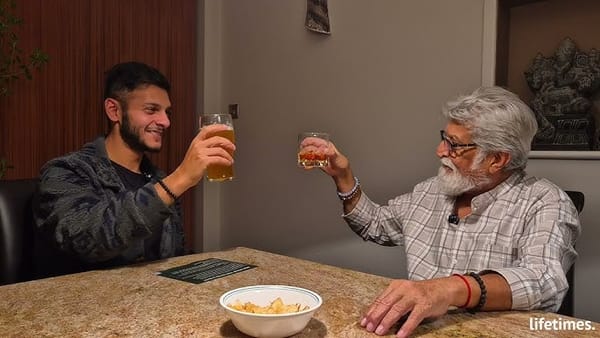
"We are all minds, and minds are very deceptive." A haunting meditation on why blood ties aren't a contract of loyalty, and why the most dangerous deceptions often happen within the walls of our own homes.

"We are all minds, and minds are very deceptive."
The most dangerous form of blindness is the one we reserve for our own family. We often use the word "blood" as a shield, assuming it protects us from the malice or deception we see in the outside world.
But as our subject reminds us, the mind is an island. Even those born in the same house can navigate entirely different moral maps.
"Minds are very deceptive," he says. "Human relationships are governed by that." His advice isn't to become cynical or cold, but to adopt a Kind Scepticism. To be open and kind to the world, but to keep your eyes wide enough to see people for who they actually are, rather than who you want them to be because of their title in your family.
The Story: The Deception of the Brother
He speaks of his brother not with rage, but with a weary clarity. Looking back, the signs were there in their youth—a fundamental clashing of characters. They were different from the start.
Yet, because it was his brother, he expected the blood tie to override those character flaws. It didn’t. Eventually, that deep-seated difference in nature manifested as a total deception. It was a painful proof of his thesis: Blood is not a contract of loyalty.
We Trust History, Not Character
The greatest mistake we make with family is confusing shared history with shared values.
Our subject observes that because he and his brother grew up in the same house, under the same "blood," he assumed they were navigating the same moral map. But biology is not a contract.
He introduces a powerful, somewhat haunting idea: The Mind is an Island. No matter how close you are to someone, you are only ever interacting with the projection they show you. If their internal "mind" is deceptive, even a lifetime of Sunday dinners won't reveal the truth until the deception is complete.
The Breakdown: Nature vs. The Label
He notes that they "clashed even when they were younger." This is the most valuable insight for the archive: Character is usually visible in the early drafts of a person. We often ignore the "clashes" of youth because we think people will "grow out of it" or that family loyalty will eventually smooth the edges. Our subject’s experience suggests the opposite: childhood friction is often a preview of adult betrayal. The "deception" wasn't a sudden change; it was the final result of a character that was always fundamentally different.
The Framework: How to Practice "Kind Scepticism"
Based on this interview, we can define "Kind Scepticism" as a three-step survival tool:
- Assume Good Intent, but Observe Patterns: Be kind and open in your interactions (the "Kind" part), but don't let the "Brother/Sister/Parent" label override the evidence of their actions (the "Sceptical" part).
- Separate Love from Trust: You can love someone because of blood, but you must only trust them because of proven character. These two things do not have to exist together.
- The "Mind" Check: Remember that everyone is fighting an internal battle or following an internal logic you cannot see. Just because they share your DNA doesn't mean they share your conscience.
"Just because it's blood, it doesn't mean someone can't deceive you."