Birthday Special: The 38-Year Distillation
For my 38th birthday, I’ve stripped away the usual birthday clichés to share the 5 questions I’m now using to audit my own life, and ensure the silence doesn't become the only record I leave behind.

I don't journal on a daily basis (a habit I'm hoping to form going into the next year of my life).
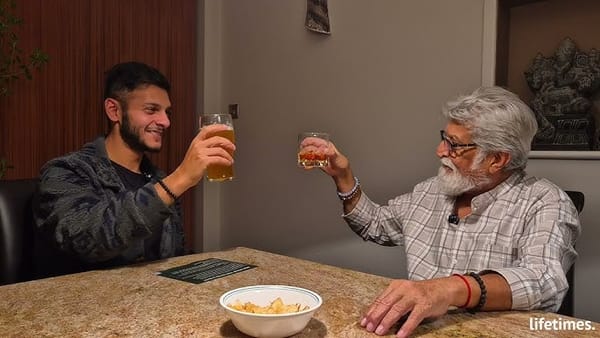
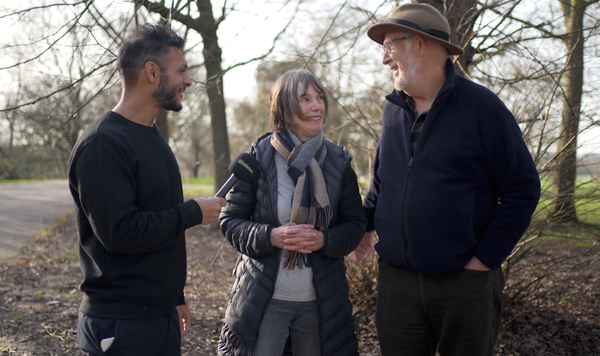
But having walked the streets and parks of the UK for the last year, asking strangers about their lives, has shifted the way I look at a birthday now. I no longer just see "another year" or a celebration; I see a timestamp of where I am compared to those I've spoken to who are decades ahead, and what they wish they knew at my age.
At 38, I’m not interested in a long list of "lessons" or generic life hacks. I’m interested in the few things that remain true when the common 'work hard and have a good morning routine' noise is stripped away. I’ve filtered nearly 4 decades of experience down to the five questions I’m now using to audit my own life.
1. We spend our 30s building a life our 70-year-old selves will have to apologize for.
I see it in the eyes of the people I interview who "followed the script." They stayed in the safe job, lived for the approval of people they didn't even like, and waited until retirement to start "living." They spent decades - often unintentionally - building a cage of comfort. At 38, I’m realising more and more that the "safe" choice is often the most dangerous one - because you don't realise you've lost until the clock has almost run out.
2. "Later" is a debt you can’t negotiate.
One of the most recurring themes has been the mindset of "Later." Later is when we’ll take the trip; later is when we’ll tell them how we feel; later is when we’ll start the project. But "later" isn't a time on a calendar; it’s a graveyard of intentions. The people I talk to who are truly content are the ones who said they gave it a go - not with the expectation everything would work out as planned, and many times it doesn't go the way they hoped. But they were the ones who could honestly stand in front of the camera and say that they didn't regret an opportunity not taken or a question not asked. And by removing the expectation, they made sure they remained content, not disappointed, with whatever came from it - because at least they gave it a go.
3. We are mistaking "Comfort" for "Connection."
From what most elders feel about the way of the world now, we’ve been sold a version of life that celebrates the path of least resistance. It’s easier to scroll than to read. It’s easier to text than to call. It's easier to ignore a difficult conversation than to tackle it head on. And tt’s easier to give a child a screen than to engage with their wild energy. But the interviews show that the moments people actually cherish are almost always in-person, where they spoke to their parents, friends, kids, or loved ones - even when it may have not always been so easy to do so.
4. You are the only one keeping your own story blank.
We wait for people to ask us about our lives, our dreams, and our history. We assume that if it mattered, someone would have noticed. But the interviews have taught me that everyone is carrying a library they are waiting for permission to open. If you aren't brave enough to share your story or ask for someone else's, that history doesn't just stay hidden, it fades altogether along with the person. You have to be the one to break the silence.
5. A birthday is a reminder of the window, not the wall.
It’s easy to look at turning 38 and see a wall of time that has already passed. But the strangers I meet who are 80 or 90 look at someone my age and see a window that is still wide open. They remind me that the concerns people at my age (and younger) worry about are almost never the ones we will be concerned about in decades from now. It's not about achieving every hefty goal, especially if it comes at the sacrifice of appreciating the time with friends and family, something that is a finite resource. Every day that passes prioritising our goals and not our relationships, is another day closer to losing them altogether.
Thirty-eight years has taught me that we don't "lose" touch with our history; we just stop being intentional with the time we have left.
I’m using these five realisations to make sure that by the time I hit my next timestamp, the library is a little bit fuller.
Which one resonated most with you?
Stay with the Archive: