Are Mobile Phones Stopping Our Kids from Having Freedom of Childhood?
Are mobile phones stopping families and kids from having the freedom to step outside and enjoy childhood moments? One interview sparks a conversation about technology and communication in families.

Freedom is something we all have access to, and the freedom of choice to use mobile phones is something a lot of people make today. Wherever you look, someone is either looking down, texting on their phone or doom scrolling on the latest Instagram reels. It's safe to say technology is slowly taking over, but to what extent do we allow it to stop us from having basic human connections and conversations in everyday life?
Clearly, the older generation sees the impact mobile phones have on current Gen Z mobile users and TikTokers…
I asked a lady in her 70s what people do today that just isn’t right. She didn’t hesitate to respond with:
Mobile Phones…
Archive 005: The price of a quiet, ‘obedient’ child
She wasn’t talking about the technology itself, not exactly… but more so the silence it’s buying us.
You’ve surely seen it: a restaurant table where the adults are scrolling and the child is glued to a glowing screen. It’s a peaceful scene on the surface, a ‘behaved’ child who you can finally get to eat without kicking up a fuss. But it’s a trade-off. We are trading the "art of talking" for a few minutes of quiet. And those few minutes set the habit for years of the child’s life, and even the parents.
Growing up in the 90s meant navigating an afternoon of finding creative and engaging ways to connect with your kids. There were no pings, no notifications, and no digital safety nets. There was just the freedom to disappear, to get bored, and—most importantly—to learn how to talk your way into and out of things.
We start to treat these small, everyday conversations as a difficult chore, because screen-time makes it easy for everyone involved; but they are actually the gym where a child’s confidence, social capability, and connection with their parents or guardians is built. When we hand them a device to keep them quiet, we aren't just giving them a toy; we are taking away their chance to learn how to be human.
So it begs the question of the impact technology, especially smartphones, has on the younger generations. Isn’t it in our best interest to stop this overconsumption of doom scrolling and open our kids to a world full of opportunities and freedom…
We “Don’t Talk Anymore” Were Once Conversations
Ask yourself this, if you had to put down the phone for one hour without looking at messages, texting anyone or watching TikTok, could you do this?
A study was done in the UK stating 51% of children use devices when eating their meals and 66% of those children would rather sit and watch their phone screen instead of eating with their parents. Families and their kids don’t talk anymore, not because they don’t want to, but because they’re finding comfort in their phones instead of the comfort of family conversations.
A childhood should be filled with laughter, mistakes and being able to have family conversations. But now, it’s moving towards a childhood filled with silence and pinged notifications. These everyday interactions might seem boring or ordinary, but they help children to learn how conversations work and how to communicate.
We don’t realise the damage social media, mobile phones and technology are doing to our younger generations, and it’s a chance for us to make a change, for children to have a childhood of fun and freedom.
Here's 3 things we should all be paying attention to:
- Protect Key Moments - The 'Unplugged' Table
The dinner table is one of the primary zones for social development. It’s where children learn to listen, wait their turn, and understand how to read facial expressions. When a screen sits between a parent and a child at dinner, valuable opportunities for this are locked off. Protect this space. It is a rare time of day where the presence together is real a competitive advantage.
(Note: we understand sometimes it’s never as easy as it sounds; screens should be a last resort)
- Reclaim the 90s Freedom
Playing in the park, cycling along the paths and playing hopscotch along the pavements, a term of fun for the 90s kids, but maybe our kids need to do the same? Instead of seeing families glued to their phones, let’s learn a lesson from the 90s and learn to play outside again. Let our kids play in the mud, run across the grass barefoot and go as high as they can on the swings. Note: yes we have to be more cautious of safety now, but it doesn’t mean we should let our kids consume the bright screens of mobile phones 24/7.
- The Mirror Effect Children
Children don’t do what we say; they do what we do. If we want them to value and develop the skills that has you reading this far into the article, they need to see us practicing it. Put your phone in a drawer when you walk through the door. Show them that the person sitting in front of you is always more interesting than the infinite scroll in your pocket.
Mobile Phones Affecting Child Development
Smartphones not only cause a lack of connection among families but also alter how the brain develops.
Studies have found that higher levels of screen time in early childhood are associated with children losing the ability to tell their own stories, especially when screen time replaces direct interactions among adults and children. Face-to-face conversations from early childhood are extremely important to how a child develops their mind and communication skills.
There are also broader concerns linked to early smartphone ownership. Some large studies suggest that children who receive smartphones at younger ages may be at higher risk of poor sleep, anxiety, or reduced physical activity, although many researchers stress that the overall impact depends heavily on how devices are used.
We have to take ownership; technology isn’t the problem. It starts with the constant use of social media sites and messaging online instead of physically interacting with people around us…
How Our Generation Can Once Again Live Life in the 90s
The 90s, according to this interview, were a time of freedom from screens, a focus on relationships, having fun in the park and a chance to connect with the outside world.
The 70+ lady described that young children have “lost the art of talking to people”, but this doesn’t have to be the case; we can help the younger generations to focus on the importance of human connection and to live life outside again instead of cooped up, glued to our phones.
Reclaiming the "art of talking" isn’t about being anti-technology; it’s about being pro-connection. If conversation is a gym, we need to stop skipping the workouts.
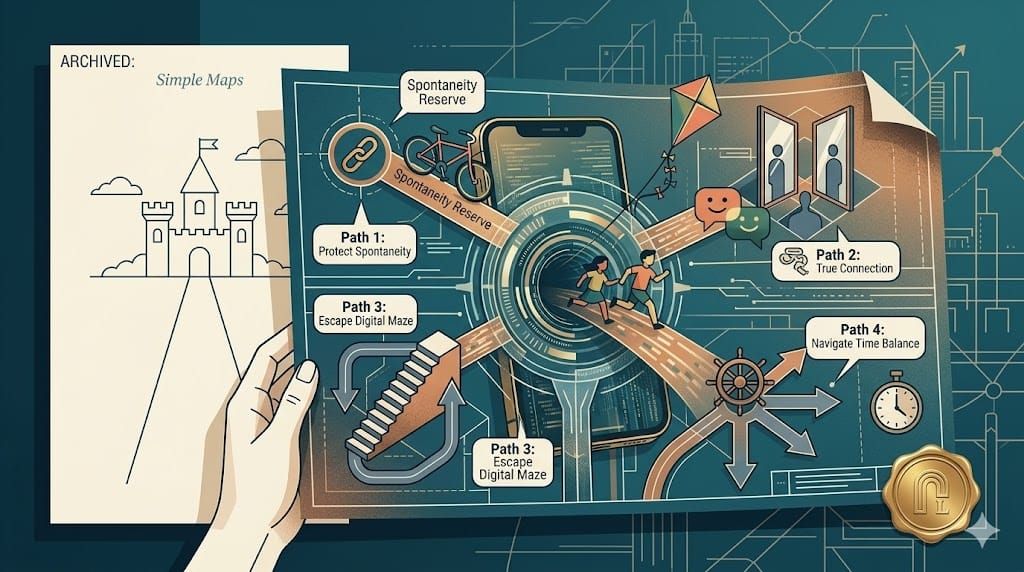
Here are four ways to reclaim those "reps" and lower the price of the quiet child: (now this links the tones to previous points and vocab)
- Say No
Children and younger kids often mirror adult behaviour. When parents say no to having phones at the dinner table, during family walks or even when watching a film together, it gives the family a chance to spend quality time together through talking, listening and being present. The most vital conversations often happen in the transition moments: the car journey to school, while you’re doing the washing, or the final twenty minutes before bed. These are the moments where a child’s guard is down and their curiosity is up. The Rule: No digital safety nets in the car. Use the "boredom" of the drive to notice the world outside the window together.
- Tell the Stories
Storytelling. Now, it doesn’t mean telling made-up stories, but telling the stories of your experiences, your history, your life. Gather the grandparents, aunts, uncles and parents with the kids together to listen to history coming to life. Families can step into history through their imagination while being in the present moment. It’s a beautiful experience and moment for children and families to learn about the culture and heritage of where they come from and what experiences their family have been through. These moments hold precious meanings for both the storyteller and the listener, a chance to ask questions, listen to memories and truly be in the present moment of the past.
- Build Something Together Project
Connections don’t always have to be through conversations, but through the art of doing. It's a chance for families and children to create memories and be present with one another without a screen. Once a month, take the time out to plant a tree together, build a birdhouse or cook a complicated recipe. The family and children working together creates a bond and space of supportiveness, communication and working together in each other’s presence.
- Go Back to Basics
Sometimes the art of connecting with one another is to simply have fun without the phones going off. Go back to simple fun with your children, like playing a board game, wordsearches, a jigsaw, monopoly or charades. It’s a chance to have fun as a family and create a space filled with laughter, rather than letting everyone doomscroll through the evening.
The “No-Google Question”
Google doesn’t always have the answers, especially when it comes to heartfelt questions. Sit together and ask questions like
- What makes someone a good friend?
- What does happiness actually mean?
- What do you think the world will be like in 50 years?
This will help your children and even the adults to start using their minds and share their perspectives on life, happiness and the world. It’s a chance to truly get to know one another and understand each other’s beliefs, because that’s what brings family closer together; listening and understanding.
The Price Families Are Paying for a Screen- Focused Child & Family
The most meaningful moments in our personal archives aren’t found on a screen. They’re built through those unscripted family conversations, and through shared laughter, stories, and emotions.
We have to face that technology will always be around, changing and becoming easier to access than ever. But we should be guiding the younger generations and our families to remain connected instead of losing touch through the pings of a mobile phone.
They happen in the small exchanges between parent and child; the questions, stories, laughter, and everyday conversations that help children learn how to understand others and express themselves.
The woman I spoke with has seen the shift happening in real-time. She sees a world where the scroll is replace the history we once spoke about around the dinner table.
It’s up to us to decide which is more valuable: the device in our hands, or the person sitting in front of us. Don’t let the silence become the only record you leave behind.